
Alamosa County Wanted List Status
The Alamosa County Sheriff's Office does not maintain a most-wanted page within the county's official web system, and there is no verified county warrant-search portal either. Without a live source, there is nothing to count, no update schedule to cite, and no photo policy to describe. There is also no sound basis for copying names or pictures into a local gallery. A current notice belongs on the issuing agency's own page, where edits and status changes stay visible.
Start instead with the Alamosa County sheriff quick-links collection. It points to Crime Stoppers and the Sheriff's Office Facebook presence. Those channels post case by case, though; neither is a complete county fugitive database. A post may later be revised or pulled. Check the date, the issuing agency, and the exact wording before treating anything as active.
The difference matters. A warrant authorizes an arrest through legal process, while a wanted notice is a selective request for public help. Plenty of warrants never get posted at all. Meanwhile, an old post can survive in a screenshot long after the person was arrested or the warrant was recalled.
Skip search-engine results when filling the gap. A copied social post can lose its original date or correction, and commercial pages can dress up an old photo with no mention of how the case ended. The county quick-links page is the authenticity bridge. If it leads to no live agency notice, the item is not a current Alamosa County fugitive listing.
Alamosa County Fugitive Post Fields
Alamosa County has no fixed template for wanted notices. One post may list height and weight. Another may give only a name, a photo, and a case number. Treat each notice as its own snapshot, not a standard record. Before acting on anything, save the post URL and confirm which office issued it. The table here is a checklist of details worth verifying, not a promise of what the sheriff will include.
| Detail | What to verify on the live notice |
|---|---|
| Name or identifier | The exact spelling and any agency or court number used to distinguish the subject. |
| Photograph | Whether the image is agency-supplied, current enough to aid recognition, and tied to this notice. |
| Warrant basis | The alleged offense or court action stated by the issuing agency, without treating it as a conviction. |
| Issue date | When the request was posted and whether the agency still presents it as active. |
| Safety direction | The specific reporting route and any caution language supplied by law enforcement. |
A wanted photo belongs where the agency posted it. People change their hair, their weight, even their names, and two people in one county can share a name. A copied picture proves nothing on its own. Never identify, follow, or confront anyone based on a photograph. Want to know whether a notice still stands? Ask the agency that issued it, since only that office can confirm the post is current.
Read Alamosa County Wanted Posts
Run a short checklist whenever a sheriff or Crime Stoppers notice appears. Old reposts circulate for years. A quick check keeps you from chasing someone already in custody. It also keeps public safety, not social media drama, at the center of your response. A Facebook image is no substitute for what a court actually records.
- Begin at the county-controlled sheriff quick-links page, then follow its link to the official sheriff or Crime Stoppers channel.
- Open the original post. Check its date, agency name, wording, and any update saying the person was located or the request ended.
- Compare the full name and identifiers without sharing extra personal data. Do not rely on a cropped image or a copied caption.
- If the notice remains active and the information is useful, submit the tip through the route shown by the official source. Use 911 only for an urgent threat.
- For later case context, use the official court route. A booking or capture can also be checked through the Alamosa County custody and booking paths.
Sending a tip does not automatically mean anonymity or a reward. No countywide terms guarantee either. So read the conditions on the specific Crime Stoppers page before you submit anything. Keep your report private, too. A tip repeated in a public comment can compromise the very case you meant to help. The official quick-links page lays out the two verified public routes and confirms that the county runs no dedicated wanted portal.
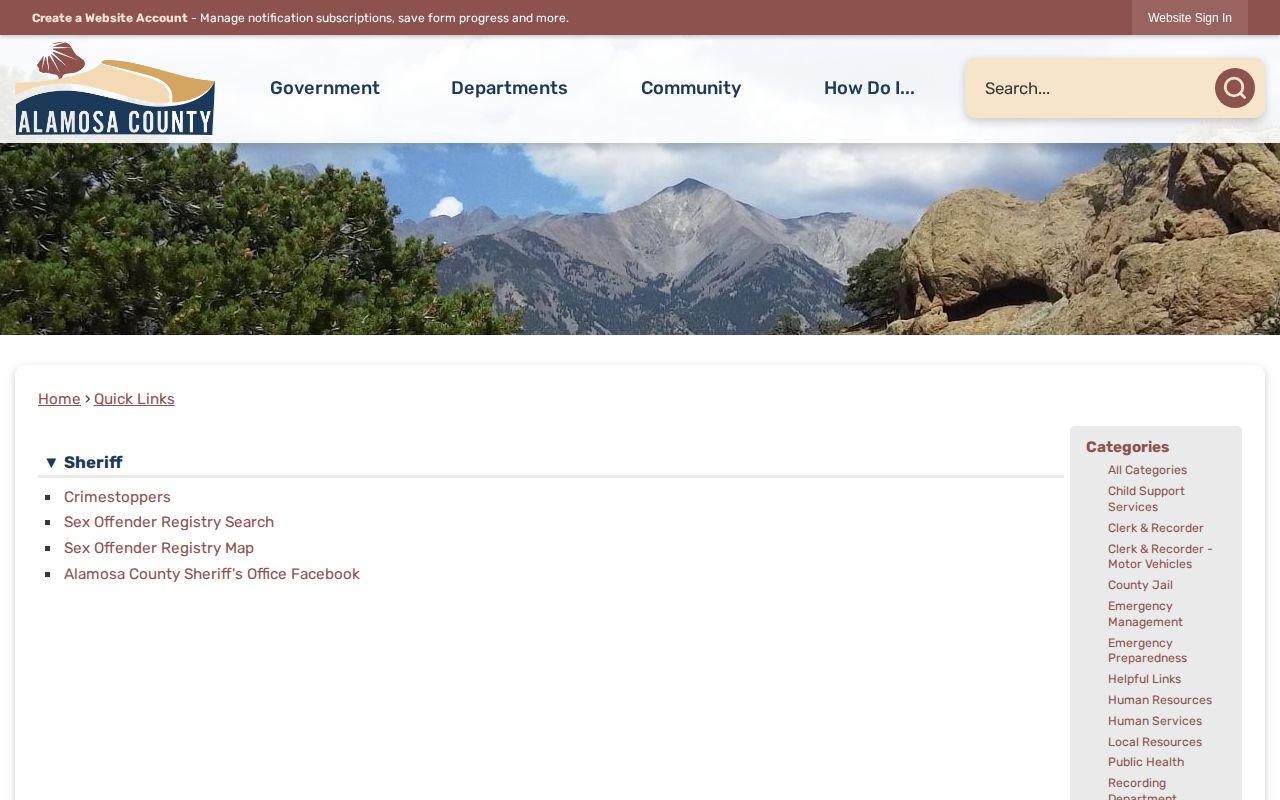
What you'll find there is a directory, not a fugitive roster. Follow the official links it provides, then recheck the live notice before sending any information about a person.
Check Alamosa County Warrants Safely
If a warrant is your real worry, skip the wanted posts. Go to the court and agency route instead. Alamosa County has no searchable public warrant portal. A case search can never serve as official proof that no warrant exists. A matter might be too new, sealed, filed under a different spelling, or simply hidden from the public interface. Your next step also depends on whose warrant you're asking about: yours or someone else's.
- For a self-related concern, contact a Colorado attorney or the court named in the paperwork. Counsel can help confirm the court, case, and lawful way to respond.
- Search the Colorado Judicial Branch case system by accurate name or case identifier for a filed matter. Treat a missing result as inconclusive.
- Use the Alamosa County court page for clerk information. The sheriff refers docket and hearing questions to the Judicial Branch and 719-589-4996.
- Contact the Alamosa County Sheriff’s Office at 719-589-6608 or non-emergency dispatch at 719-589-5807 for the public routing staff can provide. Do not assume a phone answer is a certified clearance.
- Arrange resolution through counsel, the issuing court, or law enforcement instructions. Do not travel based on guesses or try to avoid contact.
Custody is a separate question entirely. Call the Alamosa County Detention Center to ask whether someone is housed there right now. The answer tells you one thing only. It won't reveal every active warrant or how a case ends. A released person can still have an open court file, and someone named in a warrant may never have been booked at all.
Write down the exact name spelling and any case number from court papers before you dial. Give staff just enough detail to route the question, nothing more. If the warrant came from another Colorado county or a municipal court, Alamosa staff may not be the issuing authority. The named court remains the best place to confirm the order's terms and resolve it lawfully.
Note: The jail answers who is in custody now, while the Judicial Branch and the clerk hold the later case record.
Alamosa County Warrant Types
Warrants come in a few common flavors. The label on one matters. It tells you which court is involved and how the paperwork gets handled. Still, a category is just a plain-language description of a court function. It says nothing about any particular person. When the wording on an actual order confuses you, skip the guessing. Ask a defense lawyer or the clerk who issued it.
| Type | Basic meaning | Best verification route |
|---|---|---|
| Arrest warrant | A judicial order authorizing arrest based on an alleged offense. It is not proof of guilt. | Issuing court, counsel, and the responsible agency. |
| Bench warrant | A court order commonly tied to a missed appearance or failure to follow a court direction. | Court clerk, case docket, and counsel. |
A wanted notice from Alamosa County rarely tells the whole story. Headlines hint. Dockets decide. Pull the case number, find the filing court, and check the current docket before assuming what kind of matter it is. The venue splits along predictable lines. Municipal ordinance cases run through Alamosa Municipal Court, while state-law charges land in county or district court. The paperwork itself controls the route. Let it answer the question.
Send Alamosa County Fugitive Tips
Seen something worth reporting? That tip belongs with law enforcement, not a comments thread. The county sheriff's quick-links page lists the Crime Stoppers line and the department's official Facebook page. Both are solid channels for getting information to deputies. Neither comes with a guaranteed reward or a promised anonymous process. Whatever form or program page you land on, follow its posted terms. Routine, non-urgent information can go through the agency link or a call to non-emergency dispatch. If someone is in danger right now, call 911.
Alamosa County Sheriff’s Office
1315 17th Street
Alamosa, CO 81101
Office: 719-589-6608
Non-emergency dispatch: 719-589-5807
Monday–Thursday, 7:00 a.m.–5:30 p.m.
Give concise facts: which current official notice is involved, what was observed, when and where it was observed, and how the agency can follow up if the chosen channel requests contact details. Do not gather more information by surveillance. Do not post an address, identity document, or allegation online. A private report lets trained staff assess reliability and urgency.
Follow Alamosa County Warrant Outcomes
A wanted post captures one moment. Later events can include arrest, surrender, recall of the warrant, amendment or dismissal of charges, a plea, acquittal, conviction, or sentencing. Alamosa County sits in Colorado’s 12th Judicial District, so the Judicial Branch case search and local clerk are the core follow-through channels. The 12th Judicial District Attorney news page also publishes selected prosecution updates, but it is not a complete case list.
The sheriff’s direct referral of docket questions to the court is an important local handoff. Read the case number, filing court, event history, charge entries, and disposition. A disposition is the court’s recorded result. It may differ sharply from the accusation named when a warrant or wanted notice first appeared.
The 12th Judicial District Attorney’s releases can help when that office has chosen to announce a prosecution or outcome. They remain selective. No release does not mean no case, and a charging release is not a judgment. For the fullest public account, match the person and case number in the Judicial Branch system, then ask the clerk about any entry that is unclear or unavailable online.
Old screenshots should never be used to revive an accusation after an official post disappears. Verify the current source and the court result. That practice respects both public safety and the fact that legal status changes.